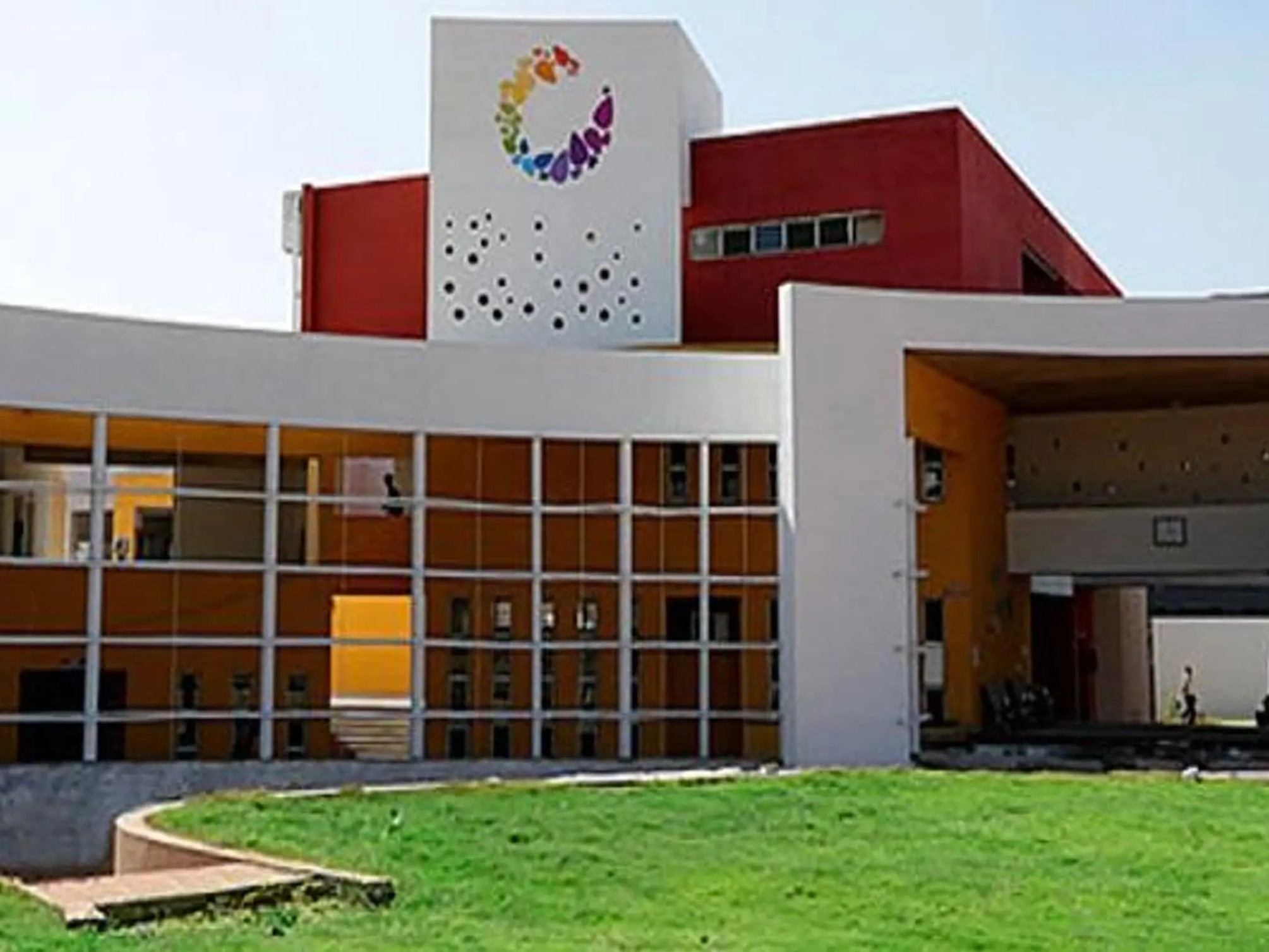
The Indira Gandhi National Open University is popularly known as IGNOU. It is a distance learning national university located in New Delhi. It was set up in the year 1985 and was named after India's former Prime Minister Indira Gandhi. The central government of India runs IGNOU. The main motto behind establishing an open university was to impart education by means of distance and open education, providing higher education opportunities particularly to the disadvantaged segments of society, encourage, coordinate and set standards for distance and open education in India and strengthen the human resources of India through education.
Objectives of IGNOU:
- Establishing higher education by taking education to the doorsteps of the students.
- Providing access to high-quality education to all those who seek it, regardless of age, region, or formal qualifications.
- Promoting and developing distance education in India.
- Offering need-based academic programs by giving vocational and professional orientation to the courses.
- Setting and maintaining standards in distance education in the country — as an apex body for the purpose.
Special Features of IGNOU:
Here are some of the special features adopted and practised at IGNOU:
- Provides equal opportunity of admissions to students from across the nation
- Relaxed entry requirements
- Provides learning at one's own pace, time and place
- Cost-effective and cost-efficient education
- Self-instructional Printed and Audio/Video course materials
- Face-to-face Counseling and Telephonic counselling
- Continuous evaluation through assignments
- Provision of terminal examination two times a year
- Interactive Satellite Aided Communication Network
- Interactive Radio Counseling
IGNOU’s Schools of Studies:
IGNOU operates through Schools of Studies, with a view to developing interdisciplinary studies. Each school is headed by a director whose role is to plan, supervise, develop and organise its academic programmes and courses. This is done in coordination with the school staff and the different administrative and service wings of the university. The following are the Schools of Studies under IGNOU:
|
List of Schools under IGNOU |
|
Types of Academic Programmes offered under IGNOU:
IGNOU offers plenty of programmes leading to Degree, Diploma or Certificate, including conventional as well as innovative and modern programmes. A majority of these programmes have been implemented after an initial survey of the demand for such studies.
These courses are developed with an attempt to fulfil the students’ need for:
- Improvement of Skills
- Certification
- Acquisition of professional qualifications
- Self-enrichment
- Scope of diverse knowledge
Course Material:
The learning material for the courses is prepared by teams of experts from reputed universities, management institutions and professionals from all across the nation and in-house facility. The content experts and language experts at IGNOU edit these materials before it is sent to the press.
The audio and video programmes are prepared on similar lines. They are produced after consultation with the in-house facility, course writers, and producers. These learning materials are previewed and reviewed by the faculty as well as outside experts and edited (if necessary) before they are finally sent to the study centres and Doordarshan.
Credit System:
A credit System is followed by IGNOU for most of its programmes. Each credit has a value of 30 hours of study comprising all learning activities. The credit system helps a student to understand the academic effort one has to apply, in order to successfully finish the course. The completion of an academic programme requires the students to clear both the assignments as well as the term-end examination of each course in the programme.
Modes of Delivery:
The methods followed under IGNOU are different from that of the conventional universities. The system in the Open University is more oriented towards the learner and the learner is an active part of the teaching-learning process. Instead of a face-to-face communication, the instructions are imparted through distance. The following multi-media approaches are followed by the University for Instructions:
- Print Material - The printed material of the programme is supplied to the students in batches of blocks for every course. A block which comes in the form of a booklet generally comprises 3 to 5 units.
- Audio-Visual Material Aids - The package consists of audio and video programmes produced by the University for Better understanding of the course material. A video programme is normally of 25-30 minutes’ duration. The audio programmes are run and video programmes are screened at the study centres during the hours of the counselling session.
- Counseling Sessions - Usually, the counselling sessions are held as per a schedule planned beforehand by the Study Centre Coordinator. They are usually held on Saturdays and Sundays. There are six counselling sessions of two and a half hour duration for each course in face-to-face mode.
Frequently Asked Questions
Sorem ipsum dolor sit amet consectur adipiscing elit sed eius mod nt labore dolore magna aliquaenim ad minim sorem ipsum dolor sit amet consectur adipiscing elit sed eius modam.
Sorem ipsum dolor sit amet consectur adipiscing elit sed eius mod nt labore dolore magna aliquaenim ad minim sorem ipsum dolor sit amet consectur adipiscing elit sed eius modam.
Speak to Counselor


Gallery